Royk Sopp: Norse Gods of Synth

 
Kylee Swenson ,Jun 01, 2009


Here, Berge and Brundtland talk to Keyboard while visiting Amsterdam (with Berge nearly being run down by a tram while on the phone) about layering sounds, holding onto the magic of an original idea, and working with some of Scandinavia’s best singers.

On Junior, you worked with vocalists with very distinctive voices. How do you decide which vocalist is right for a particular song?

Svein Berge: Well, for instance, Lykke Li — she has a very sensual, percussive voice, which we thought would be in tune with what we wanted to present in the track “Miss It So Much,” which was to be a romantic view — without sounding too nostalgic — on missing analog in a digital world. So selecting voices is the same process as selecting which sound should play the lead, which sounds should play the chords, the bass kick, and so on.

You guys wrote the basic idea for a track on The Understanding at a party to prove to some girls that you write your own music. Do you generally work out ideas together or separately?

Torbjørn Brundtland: We split it mainly into two ways. One is the more easy and fun way to do it: We meet up, hang out, listen to music, find some nice sounds, start playing with them, follow intuition, and record the bits that sound good and scrap what doesn’t. The other way is where you have an image in your head, and you try to make it become reality. That’s always much harder.

Hip-hop producer Just Blaze once said when songwriters are so emotionally attached to a demo version of a song that they’re never happy with the final version, he calls it “demo-itis.” Have you experienced that?

TB: I’m flabbergasted that someone actually made a word out of that. It’s ingenious and should go straight into the dictionary, because I think everyone who has been involved in music at some stage knows about that. I think that’s a very personal thing that can lead to a lot of potential arguments between musicians because if you record something, there will always be one who has a preference for a better recording, and another who has a preference for a better expression. I remember reading interviews with Portishead in their heyday, and they talked about the importance of keeping the original expression without re-recording, even though the original recording didn’t even have the right lyrics. So I think that if you’re able to find the right balance, then you are at the point where you want to be, because an early version is going to be flawed, and if you clean it up too much, the magic has disappeared.

How do you keep the magic?

TB: Let’s say there are some crackles in a recording that somehow sound unwanted, but at the same time, you like it. You can go into micro detail and say, “I like these crackles here because they serve a purpose, but the crackles where the chorus is coming in just sound plain unprofessional, so let’s remove those and keep the ones that I react emotionally to.”

How much do you still use the Korg MS-20 and Roland Juno-106 synths?

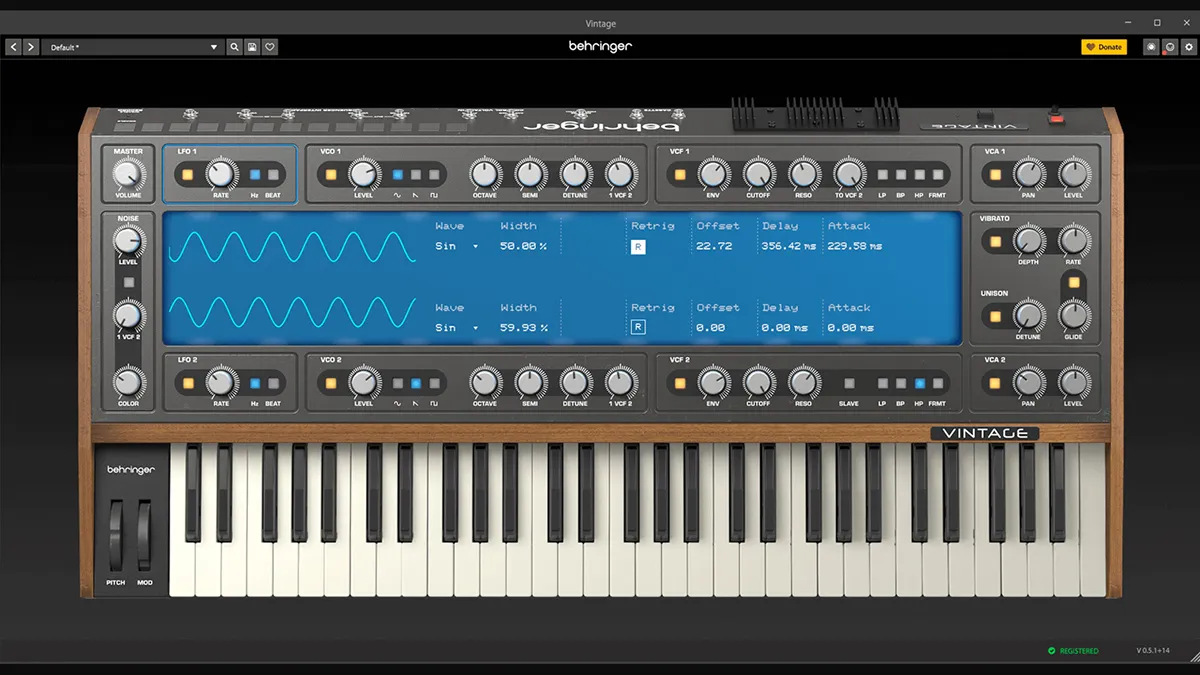
SB: We still have them and use them for all they’re worth. But at the same time, we try to conceal to some extent when we use them because we don’t want the synths to be too easily recognizable. The Juno’s sound in particular is very distinctive. To conceal them, you can layer them with other synths. If, for instance, you want a pad, like a string sound from the Juno, you can just add a different pad or string sound from another keyboard and let them play the same thing. And you can patch sounds through the MS-20 and use the filters to mess around with it. Or you can put some things through guitar pedals, and there are so many plug-ins that can alter sounds in many ways.

In order to make what some people refer to as warmth, we tend to send sounds through old tube compressors. We have a few Chandler Limited TG1 Abbey Road compressors because we’re so fond of them, and we have a very cheap, old, eight-channel Boss mixer. When we send stuff through that, it sounds like it’s been through a tape recorder 20 times.

What was the process for creating “The Girl and the Robot” with Swedish singer Robyn?

SB: We spoke a little about Lykke Li with her sensual, percussive voice, whereas Robyn has the more traditional pop voice. It’s very clear and versatile. So we asked her whether she’d be willing to play with two shabby idiots in a cupboard in Bergen, Norway. She’s easy to trick, so she said yes. We had already made a few ideas for the song, and I think we had at least four different ways we could take it. At one point we had something that was more orchestral with lots of strings. It was a bit more pompous, and slower. We decided to go for the more uptempo, energetic take on it. We wrote the lyrics together and also shaped the main body of the melody of what she sings.

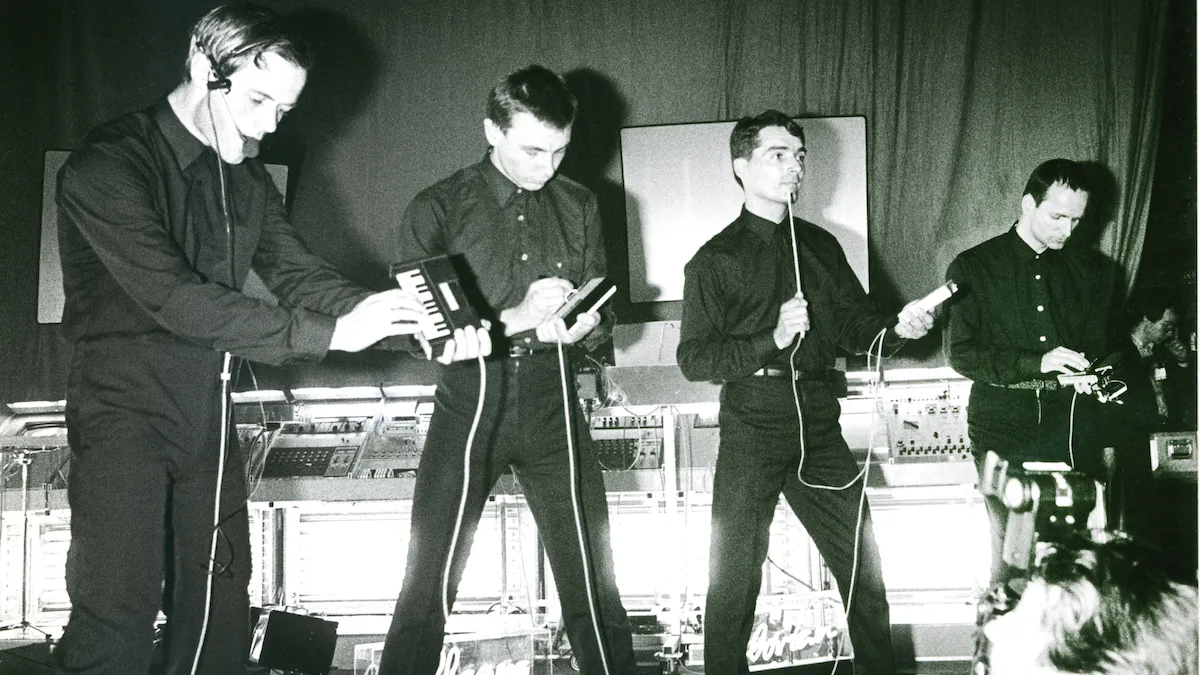
As for the production, there’s a bit of the orchestral synth, which is like the crown jewel for any train-spotter in terms of keyboard fetish: the Vako Orchestron. It’s favored by the likes of Florian Schneider of Kraftwerk, especially on their album, Radio- Activity. So we used the Orchestron mixed with the choir from the Roland VP-330 Vocoder, mixed with our singing. We sing on top of these two synth sounds, the exact same chords, but it just makes a whole thick, rich thing. It’s very low in the mix, but it adds dimension to the whole sound. Plus there’s a very nice kick, which is sidechained by compressors into the chords, so that it sort of eats into the music, which is a common way of making things pump. [See our Dec. ’08 issue or keyboardmag.com for a tutorial on making your tracks pump using sidechains. –Ed.]

There are a lot of intertwining keyboards, as on “Vision One.” When do you know you’ve got enough going on or when you should cut back?

SB: That’s the brain damage we have — to us, it’s never enough! We like it to be a bit “wrong.” Dub music, for example, is great when it’s lo-fi and a bit wrong. You can hear the hissing and the distortion. And you can hear that some instruments might be out of tune, and they might miss the beat. When it all becomes a bit stupid and off, that’s something that we love. In terms of building a crescendo, as we do towards the end of “Vision One,” we just keep on going. But you don’t want it to be a cacophony of melodies trying to kill each other. As soon as you start with your fifth melody, and you go, “Okay, now this is turning into a guitar solo,” you have to back off and rethink.

RÖYKSOPP SAMPLING SECRETS

Samplers: Akai S series, including the S3200XL. “In addition, we mess around with the audio in an editing program [mostly Steinberg WaveLab]” Berge says. “We sample vinyl, CD, field recordings, or we just record things onto tapes, send them through our gear, and re-record it again.”
The not-so-secret sample: “Happy Up Here” has a sample from Parliament’s track, “Do That Stuff.”
Vinyl noise: “We’re suckers for the vinyl sound,” Berge says. “There’s no hiding that, and we don’t try to. If anything, we deliberately try to make it sound more vinyl-y by adding a crackle sound and ground sound, which you can hear toward at the end of ‘Silver Cruiser.’ There’s lots of humming and hissing, and that’s all put in there deliberately to create the vinyl feel.”


Leave a Comment
Name:
Location:
Average Rating :
 

Chester Thompson B-3 Master Class

Ten Minute Technique - Warming Up Under the Gun

The Chord Doctor - Expand Your Chordal Command

Get Funky on the Rhodes

Synth Sense - Hot Synth Licks for Non-Synth Players


The next generation of mainstream keyboard star will most resemble what type of musician?
 
Subscribe Live Bookmarks Advertise Contact Us Privacy Policy Terms & Conditions


Keybord Magazine is a trademark of New Bay Media, LLC. All material published on www.keyboardmag.com is copyrighted @2009 by New Bay Media, LLC. All rights reserved