Main Site Navigation

KeyboardMag.com >> This Month >> Midi System-exclusive
Images

Sys-ex is handy for special synth and studio tasks.

Midi System-Exclusive

| December, 2006

If you use MIDI regularly, you’ve probably seen references to system-exclusive data, also known as sys-ex. As more synthesizers and samplers become computer-based, sys-ex is used less than it was ten years ago. But it’s still an important tool for extending the power of hardware instruments.

System-exclusive is part of the original MIDI Specification. It’s a way of allowing individual manufacturers such as Korg and Yamaha to send whatever data they would like through a MIDI cable, usually targeted at a specific model of synthesizer or other MIDI equipment. Without getting too tweaky, we can simply say that each manufacturer defines what their sys-ex messages will be used for, and how the data in the messages is formatted.

PRESET MANAGEMENT

The most important use of sys-ex is for sending the banks of presets in a keyboard to a computer for off-line storage. If you have a computer, this makes the memory of your synth basically unlimited. You can edit the 128 presets in the instrument, use sys-ex to transmit them to a computer, store the file, and then create 128 fresh presets, secure in the knowledge that you can restore the previous set at any time.

Many manufacturers provide programs called editor/librarians to make this process easier. Using an editor/librarian (ed/lib), you can rearrange the presets in existing banks to make new banks. You could have one bank for blues gigs, for instance, and another for recording sessions. Free ed/libs are supplied with some instruments by the manufacturer, and companies like Sound Quest (www.squest.com) sell “universal” editor/librarians compatible with hundreds of devices.

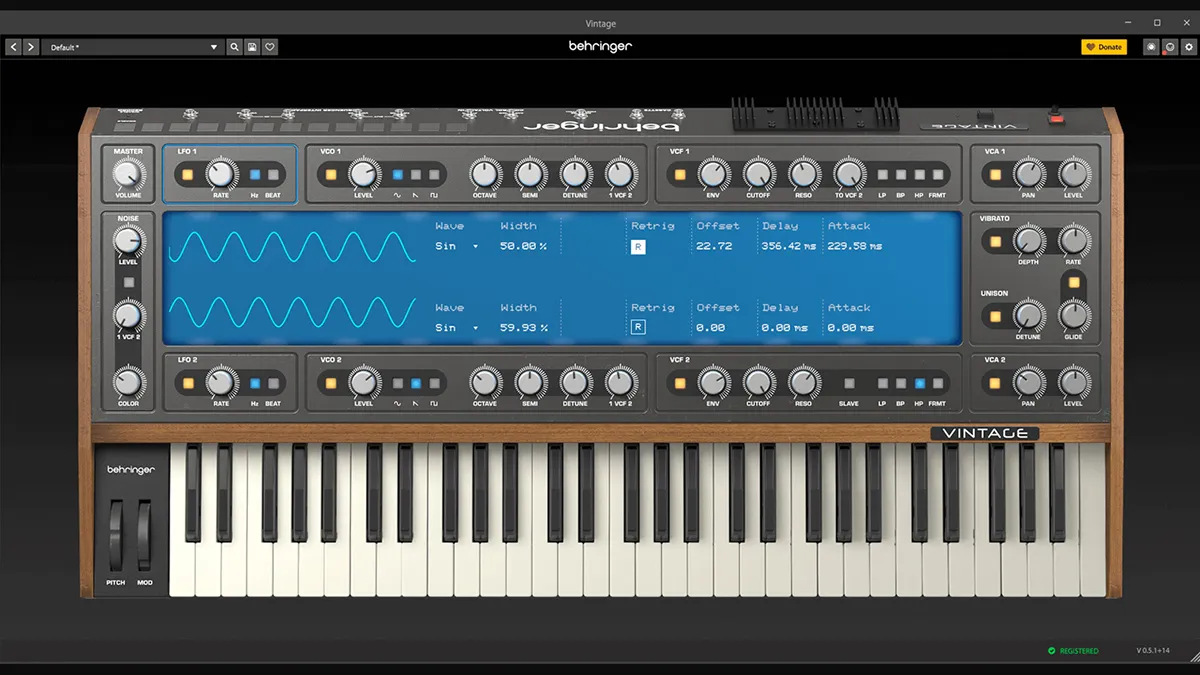
An ed/lib usually provides a big, friendly screen in which you can edit synth parameters one at a time. If you move the filter cutoff control using the mouse, for instance, the ed/lib will send a sys-ex message to the synth telling it about the edit. No other instrument in your rack will respond to the message, because it’s exclusive.

Some instruments can only send their preset banks in response to a MIDI message called a dump request. If you don’t have an editor/librarian compatible with your synth, you may be able to create a dump request in a sequencer like Cakewalk Sonar, which has excellent sys-ex utilities.

OPERATING SYSTEM UPDATES

Sys-ex is also used for updating the operating systems of hardware instruments. The new operating system (OS) may fix problems or add to the hardware’s power by installing new features.

It’s a good idea to check the manufacturer’s website once in a while to see if a new OS has been released for your synth. Needless to say, only the hardware manufacturer can provide an OS update. You can’t change the OS yourself using sys-ex, nor can you send sys-ex data intended for one model to another in order to mingle their features.

When updating an OS, it’s important to follow the manufacturer’s instructions. Typically, you’ll download the new OS from the manufacturer’s website into your computer, load the downloaded file into your sequencer, power up the synth in a special mode, and play back the sequence to transfer the data.

Sys-ex data dumps can be quite large, and will tie up your system for many minutes. Interrupting the transfer halfway through is likely to be disastrous, possibly rendering your synth unplayable.

MORE CONTROL

MIDI defines a basic data type called control change (CC) messages for adding realtime expressive control to your sequences. CC messages are not part of system-exclusive; they’re simpler to use. But older MIDI synths are often more limited than new ones in their ability to respond to CC messages. With some, you may be able to record and play back mod wheel (CC1) messages and not much else.

With some instruments, sys-ex provides a useful workaround. You may be able to switch on sys-ex transmission for the instrument’s front-panel controls, enable sys-ex recording in your sequencer, and then record knob and slider moves while the music plays. (Check the instrument and sequencer manuals for specifics.)

It’s better to use CC messages if you can, because sys-ex has two limitations: It’s extremely tough to edit, and it can interfere with the timing of MIDI notes because it takes up more of the bandwidth in the MIDI cable.

Technically it’s possible to edit the short sys-ex messages used for realtime control by altering one byte at a time. Your sequencer may provide an edit utility for this. But it’s not fun, and you need to know what you’re doing. The large sys-ex files used for OS updates and storing preset banks should never be edited.

Jargon Jockey


. Byte: The smallest part of a MIDI message. Bytes are often represented in a numbering system called hexadecimal. Bytes range in value from 00 through FF. (FF is equal to 255 in decimal numbering.)
. Hexadecimal: A numbering system that has 16 digits (0 through 9 followed by A through F) rather than the more familiar ten digits. MIDI messages are sometimes shown in hexadecimal (hex) in sequencer event editors.
. Operating System (OS): The software that tells a piece of hardware (such as a computer or keyboard) how to operate.


Keyboard Magazine is part of the Music Player Network.