|
|
![]() |
KeyboardMag.com >> This Month >> Grassroots Rock: Troye Kinnett With John Mellencamp
Skip to [ Story Content and jump story attachments ]
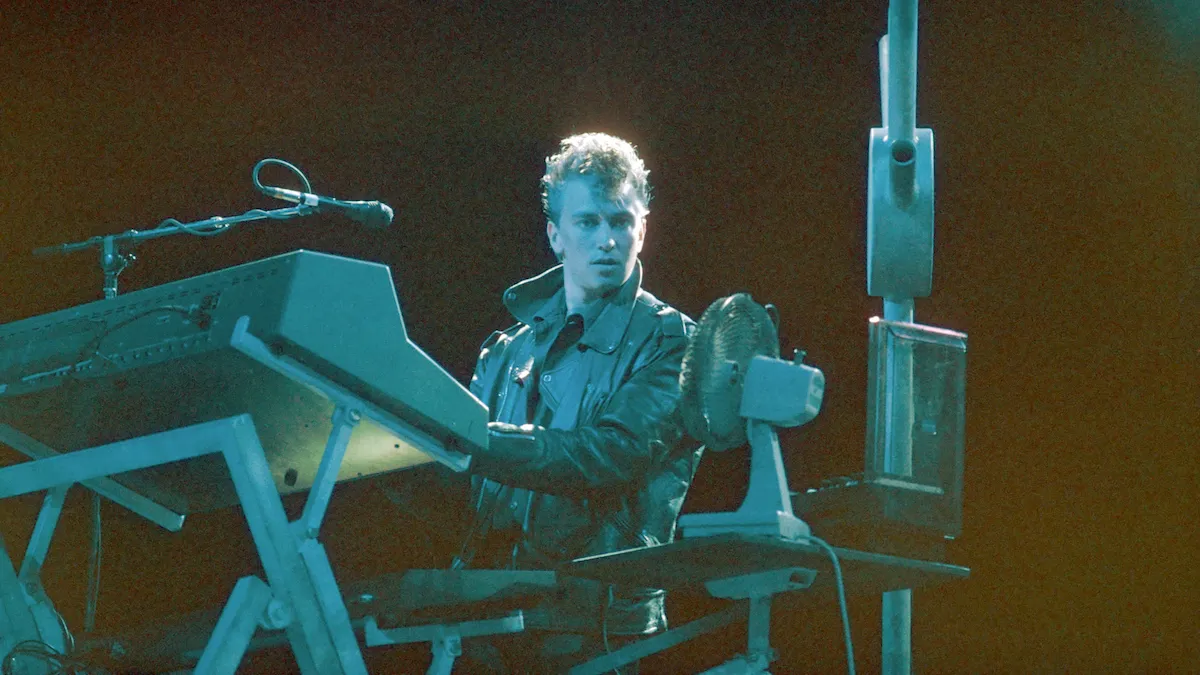
Grassroots Rock: Troye Kinnett with John MellencampJohn Mellencamp has crafted a very effective image as the guy next door, the man just doing his best, the songwriter who speaks for the heartland. His success speaks for itself, as he’s penned some of the most anthemic hits of the past 25 years, among them “R.O.C.K. in the U.S.A,” “Small Town,” “Hurts So Good,” “Check It Out,” and many others. And the fame hasn’t belied the image: All you have to do is get to know his largely Indiana-bred band to find that his preference for honesty, loyalty, musicianship, and local talent runs deep. Case in point: Having been in the band for two years, keyboardist Troye Kinnett is still the new guy. Musical director and guitarist Mike Wanchic’s been in the band for over 30 years, drummer Dane Clark for 12. Everyone in the band’s been playing on sessions and in other bands together for years, and they’re all part of a vibrant music scene that encompasses Bloomington, Indianapolis, Fort Wayne, and, over in Ohio, Cincinnati. Getting into the Mellencamp band isn’t about having the right connections: It’s a factor of friendship. Troye, hailing from Muncie and trained as a composer and a jazz pianist, landed a staff position at an Indy studio, writing jingles and TV spots and doing post-scoring around 1990. As the top call drummer in the area, Dane Clark was Troye’s first choice for his own sessions, and over the years they worked a lot together, as well as with others who were in the band at the time, such as John Cascella and Larry Crane. When the keyboard chair finally opened up in 2006, it was Dane who recommended Troye for the gig. “I planned to write music, whether for TV or songwriting,” explains Troye. “But I really wanted to play in a rock band! I always figured that composing is what I’d fall back on after my rock years. As it turned out, I did that for 20 years until I finally got a real job!” Interestingly, the squeezebox played a pivotal role in Troye’s employability. “Most of the reason I got my foot in the door was because of my accordion playing,” he says. “I was filling in on the rehearsals of The Ghost Brothers of Darkland County, which is a musical that John is writing with Stephen King. Well, 14 of the 16 songs were on accordion. There were four days before rehearsals began, and for three of those I had scheduled a trip to New Orleans to move my grandparents back up to Indiana, following hurricane Rita. So I took the accordion with me, and I rode in the back of my brother’s truck, practicing the whole way down, so I’d be ready for Monday morning’s session.” When it came to the heart and soul of John Mellencamp’s music, however, Troye had more to assimilate than just instrumental skills. “The first tour I did was great, the parts were already done, I just had to play them as arranged,” he says. “But it was during the recording of Freedom’s Road that I really learned how to play for this band. I grew up listening to the music of the ’70s and ’80s, but John’s music is really rooted in the ’60s. And I was initially having a hard time coming up with the right parts. On his iPod, John has the Billboard Top 100 songs for every year for the past 50 years or so. So he’d pull up 1966, and we’d listen to what the hits were. Sometimes John would play the tunes for me right in the session, or he’d say, ‘Here, take my iPod home with you.’ I was able to play anything, but it’s a matter of communication; it’s finding out what needs to be played that’s hard. “Al Kooper, Garth Hudson, those were names that came up quite a bit, guys who I had to channel, the tones I needed to learn to get. I listen to them now, and I think, ‘How did I miss that?’ It’s great now to read a review of the CD or of our concerts where the reviewer says, ‘Great Dylan-esque organ.’ Okay, I’ll take that! It doesn’t sound like me, maybe we’ll get there someday.” The recording of Freedom’s Road was a band effort, with rehearsals for working out all the parts and arrangements. The approach to Life Death Love and Freedom was totally different. “John brought these songs in, and you could tell he was kind of an open book with the songwriting — these were so powerful,” says Troye. “T Bone Burnett was producing, and he had John’s original vocal and guitar tracks as the rhythm tracks. And then we added things on top of those. John would have an idea, like, ‘Why don’t you play a melodica part on this song.’ So I’d come up with something, and T Bone would usually just say, ‘That’s beautiful. I can work with that.’ Then he’d go and add his other parts, like his baritone guitar with the tremolo here and there. But he wanted to get our parts the way we heard them.” The album has a very distinct sound, due in part to Troye’s keyboard parts. “The field organ worked on a lot of stuff,” he explains (see sidebar, “Field Work”). “John is the one who wanted the field organ. We used the melodica, B-3, and tack piano. “For the live show, I sampled the sounds myself. I saw where [engineer] Mike Piersante miked the field organ, and I just stuck a Shure Beta 58 in the same place, and it worked. I sampled straight into the Motif. There was a lot of button pecking and dial spinning while I set loop points! It was tedious. But I knew this would be the most foolproof way to get these sounds into the live set.” Troye Kinnett has blossomed into his role in the John Mellencamp band with his blend of musicianship, open-mindedness, and hands-on hard work. But the real secret ingredient to a great show? “You always want to have a little bit of adrenaline,” he says. “Before the show, you just listen to the crowd out there, and then go out and play every note like it’s your last one.”
For more info on Troye, please visit: www.troyekinnett.com |
Keyboard Magazine is part of the Music Player Network.