Ever seen a cop movie where the detective who made a name
for himself chasing down crooks, engaging in car chases, monkey-boying up fire
escapes, and jumping fences did those things so well that he was “promoted” to
being stuck behind a desk? And now, he longs to see some real action? When you came up as a writer/musican, and getting
the story is in your blood, finding yourself in charge of a magazine can feel a
lot like that. You’re a manager now. So, you try to create your
opportunities to jump fences and have car chases when and where you can get
away with it. You try to offset the degree to which being “the man” interferes
with being a man.
Sometimes, fate smiles and you don’t have to try all that
hard. Such was the case this past weekend, when I made my way to Los Angeles
for a trip that had so many purposes, even Scrooge himself couldn’t have had a
problem with the modest dents I put in my expense account. Of course, even the
pre-ghostly-vistation ol’ Ebeneezer has nothing on NewBay Media, but fingers
crossed…
Here are the parts of the itinerary that I can talk about.
;)
Thursday, April 22
ASCAP Expo had a higher profile and greater attendance than
any previous year. For the uninitiated, ASCAP is one of three organizations
(the other two are BMI and CSAC) that make sure that when a song is played in
public, the songwriters and producers get their cut.
In addition to a whole lot of seminars where industry
insiders gave aspiring hitmakers valuable insights on how to manage their careers,
there was this mini-NAMM-show aspect to it. Many gear manufacturers chose to
exhibit on the mezzanine of the Renaissance Hotel at the corner of Hollywood
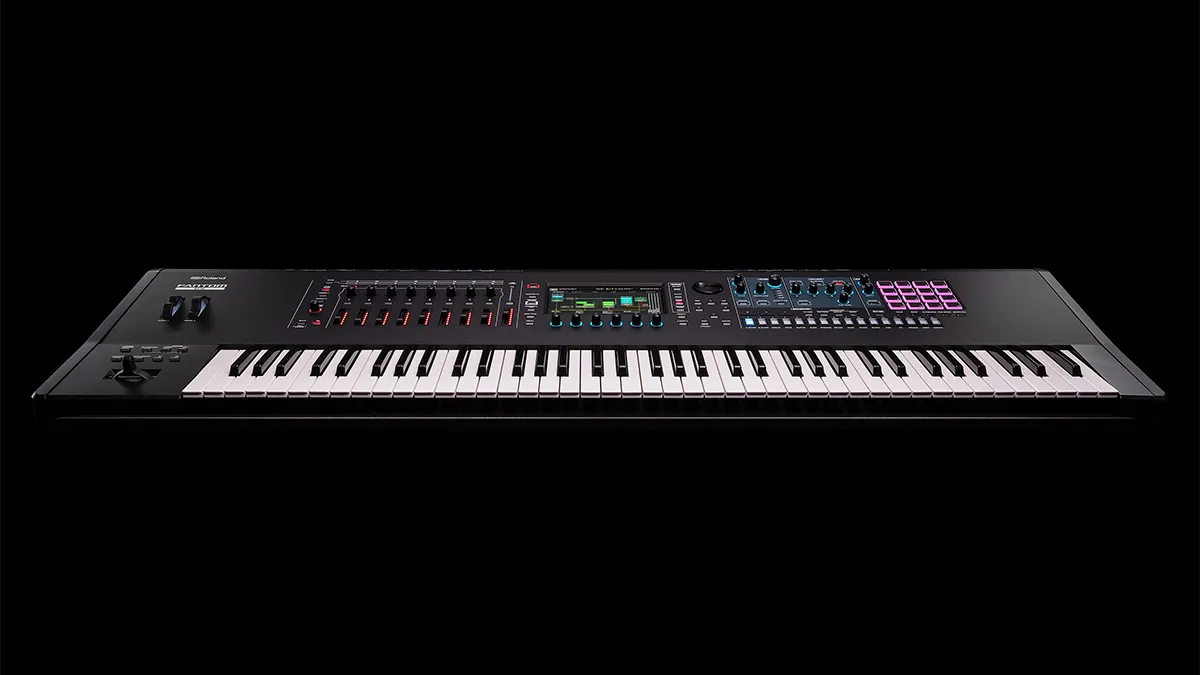
Boulevard and Highland Avenue. Roland had a V-Piano, Fantom-G, and new Octapad SPD-30 set up there, on which I attempted the only beat I can actually play
with drumsticks, Aerosmith’s “Walk This Way.” This prompted the signature
guitar riff from a 14-year-old a couple of booths down—who could shred your
face off.
Then there’s PMC speakers. If you haven’t heard their new
AML-2 compact monitors, doing so will either make you immediately buy a pair,
or rue the fact that you don’t have $10,500 to do so. I was one of the first
100 ADAM buyers this side of the Atlantic, my S2A’s have been my go-to monitors
for seven years, and I’ve been smug in my lack of speaker envy . . . until now.
Prism Sound was also there, showing off their Orpheus
FireWire audio interface, which uses the same core converters as their high-end
studio stuff. The profile of this box is rising, thanks in part to electronic
music artists like Morgan Page and Deadmau5, who swear by it. At around $4,500, it's definitely a commitment, but also definitely one you can hear the results of immediately.
Yamaha had the new CP-5 on display. Utilizing the same
“Spectrum Component Modeling” as the CP-1, it lacks the genuine FM synth of the
CP-1, but more than makes up for this with a metric buttload of sample-based
sounds that the more expensive CP-1 doesn’t
have: Clavs, strings, synths—basically everything you need for the gig. I
predict that the CP-5 will be the “sweet spot” sales leader of Yamaha’s new CP
line. The CP-1 is a stellar instrument, but as it’s focused on quality rather
than quantity of sounds, it’ll appeal to those who can afford both its price
and to have other bases covered by other synths.
Also at ASCAP Expo was MasterWriter, which can only be described
as a lyrics synthesizer, or perhaps “Thesaurus Rex.” Just watch this video,
as it’s easier to show you than to tell you. The brainchild of legendary
songwriter/composer Barry DeVorzon, MasterWriter brings true flow to the
process of writing song lyrics, and if it won’t bust your writer’s block,
nothing will.
Friday, April 23 (Day)
The highlight of the day was a stellar interview with DEVO
for an upcoming cover story. More on that in a bit, but first, a little
back-story.
You’ve probably heard that they’re releasing their first
studio album of all-new material in over 20 years. Their marketing campaign,
which you can experience in full force at http://clubdevo.com,
both makes fun of and actually makes use of the mechanisms that corporate
America uses to establish rapport with the hopefully-money-spending public:
focus groups, surveys, an outreach exec (“Greg Scholl”) with a halogen smile—that
kind of thing. No surprise, as these guys have been the kings of subversive
irony since Kent State art students Gerald Casale and Mark Mothersbaugh got the
band together in 1973, motivated in part by a justifiably cynical attitude
towards government, big business, and authority in the wake of the infamous
shootings of unarmed students by Ohio National Guardsmen at that university.
Central to their new campaign is a “Song Study” where you
listen to snippets of 16 new songs they’ve recorded, then vote on your favorite
12 to be included on the final release of the new album Something For
Everybody. The vocabulary on the site is so stereotypically and hilariously
corporate that some fans have wondered whether the whole thing is a spoof. For
a couple of uncomfortable days, this perception was compounded by a photo of a
press “sampler” CD that I Tweeted in my enthusiasm for the band. It happened to
have 12 tracks on it, but they weren’t necessarily the final selections. Still,
people love dirt even when it doesn’t really exist, and some DEVO fans
concluded that the existence of this CD proved the Song Study to be a fake.
Whatever else is satire on their website, the Song Study
isn’t. Gerry, Mark, and the whole DEVO machine really do want fans’ input about
what songs to put on the record. I logged onto their fan forum to set the record straight. Look for the post from "Stephen Fortner of Keyboard" on page 2. I also pulled the picture, though if you’re morbidly curious,
you may still find it on the sites of certain bloggers who haven’t yet responded to my or DEVO’s requests to take it down.
Now that that’s cleared up, on to the fun stuff. I did the interview at Mutato Muzika,
DEVO’s studio on Sunset Boulevard in West Hollywood. The first thing you notice
is that the building is so them—circular and painted radioactive green, a psychedelic
version of Lady Elaine Fairchild’s "museum-go-round" from Mr. Rogers.
In fact, it is something of a museum. Mark Mothersbaugh has an
incredible collection of vintage gear, though some of the rarer
pieces—including a genuine Raymond Scott Electronium—were in storage to give
the band room to rehearse. Plenty was on hand, though, including an original
Ondioline that Pink Floyd was going to throw away, a real steam-powered calliope (now powered by a much safer ShopVac blower), a Moog Aries modular,
and an array of wonderfully circuit-bent creations. What you don’t see on our
Flickr photo stream will be in videos we’re now editing, as the ever-gracious
Mark gave us a thorough tour. We’ll have those up soon, so watch our Twitter
feed for the announcement, and look for our cover story on the band in the
August issue.
Last but not least, I can't thank Mark Mothersbaugh enough for letting me play his gorgeous Hammond Novachord. Finding one of these in playable condition, let alone this nice, is almost impossible. The Prophet-5 is widely regarded as the first commercially available polyphonic synthesizer, but we'd have to add "that you could take to a gig and put on top of your Rhodes," because really, the Novachord claims the real title, and predates the Prophet by almost four decades. It was the sound of '50s sci-fi and horror movies, no less.
Friday, April 23 (Night)
That night, Jordan Rudess and I got together, as he and
Richard Devine were guests at Roland’s Keyz ’n Beats Summit, which was an
afternoon of hands-on synth, beatbox, and V-Drums clinics, along with Q&A
sessions with Jordan and Richard, a concluding jam, and a raffle of a new SH-01 Gaia virtual analog synth signed by Jordan.
We just did some prep and brainstorming over dinner at an
old-Hollywood institution, Yamashiro, where we were joined by Roland’s Scott
Tibbs—a mother of a keyboard player himself.
Nestled on a hilltop behind the Magic Castle, it serves
absolutely delicious Japanese food. Even better, you know the restaurant where
Uma Thurman and Lucy Liu have their final showdown in the movie Kill Bill Vol.
1? The whole place looks kinda like that.
Saturday, April 24
The big day: Roland’s Keyz ’n Beats Summit was, by all
measures, a smashing success. Both the Richard Devine and Jordan Rudess sessions
benefitted from so many intelligent audience questions that I barely had to do
any work as moderator.
The venue, Musicians’ Institute, has soared in terms of
industry respect over the past few years, thanks in no small part to the
efforts of keyboard program director Kevin Comstock. Tucked onto McCadden
Place, not half a block from the Hollywood/Highland corner, the El Capitan
theatre, and the set of Jimmy Kimmel Live (where DEVO played the Tuesday
previous), the place is like Doctor Who’s TARDIS: a lot bigger on the inside
than it seems on the outside.
In the Gaia Lab, Roland’s Dan Krisher gave an introductory
clinic on subtractive synthesis to a room packed with 16 participants, each
sitting at his or her own Gaia synthesizer. A Roland classroom monitoring
system let any pair of headphones in the room hear the output of any other
player.
Facing Hollywood Boulevard is a café/performance space run
by the school. It’s known as “The Garage,” and here, Roland’s Scott Tibbs and
renowned drummer Mike Bennett threw a funky and furious jam.
That jam was eclipsed only by the one at the end of the day,
when Jordan Rudess manned a full plate of Roland gear—V-Synth GT, V-Piano, and
Gaia—and Richard Devine played another Gaia as well as Ableton Live on his
laptop. We’ll have much more high-definition video of this up soon, but for
now, here’s a clip I grabbed with my trusty Zoom Q3 video camera.
Congratulations to Leo Lowenthal, the lucky winner of one of
the only SH-01 Gaia synths out there in the world right now. All attendees got
raffle tickets, and Jordan drew the winning ticket from the fishbowl, then
signed the white Gaia in blue permanent marker. Ironically, Mr. Lowenthal kicked
off the Q&A session by describing himself as a fan of piano music who felt
alienated by the sound of synthesizers. However, his son Ari was starting at
Musicians’ Institute and loves synths, so he did what any good dad would do.
“This synth is for Ari,” Leo told me.
All in all, the sense of community, not to mention
enthusiasm for synths and sound design, was palpable and made me feel all warm
and fuzzy. This event promises only to grow, and Roland currently intends it to
be twice a year (April and October, I think). Watch our Twitter feed
(@keyboardmag) and/or theirs (@roland_us) for details about the next one. I’ll
be there, and would love to meet you in person.
Saturday Night, April 24
A big shout-out to Sara Griggs, one of the hardest-working
publicists in the music industry, for inviting me to an epic party hosted by
Rami Jaffe, keyboardist for the Wallflowers and more recently the Foo Fighters,
at Fonogenic Studios, his vast and very cool facility in the San Fernando
Valley. It was co-sponsored by Justin Timberlake’s 901 Tequila, which flowed in
abundance. Thanks also to Roland’s art director Jane Kuromi. If you see a
Roland ad in our magazine or any other in the U.S., she did the design. More
relevantly that evening, she came to the party, driving my no-car-havin’ butt
there and back in spite of living in Long Beach and in spite of not having your
own wheels being up there with leprosy in L.A. Roland's class obviously doesn’t
stop at the door—you rock, Jane.
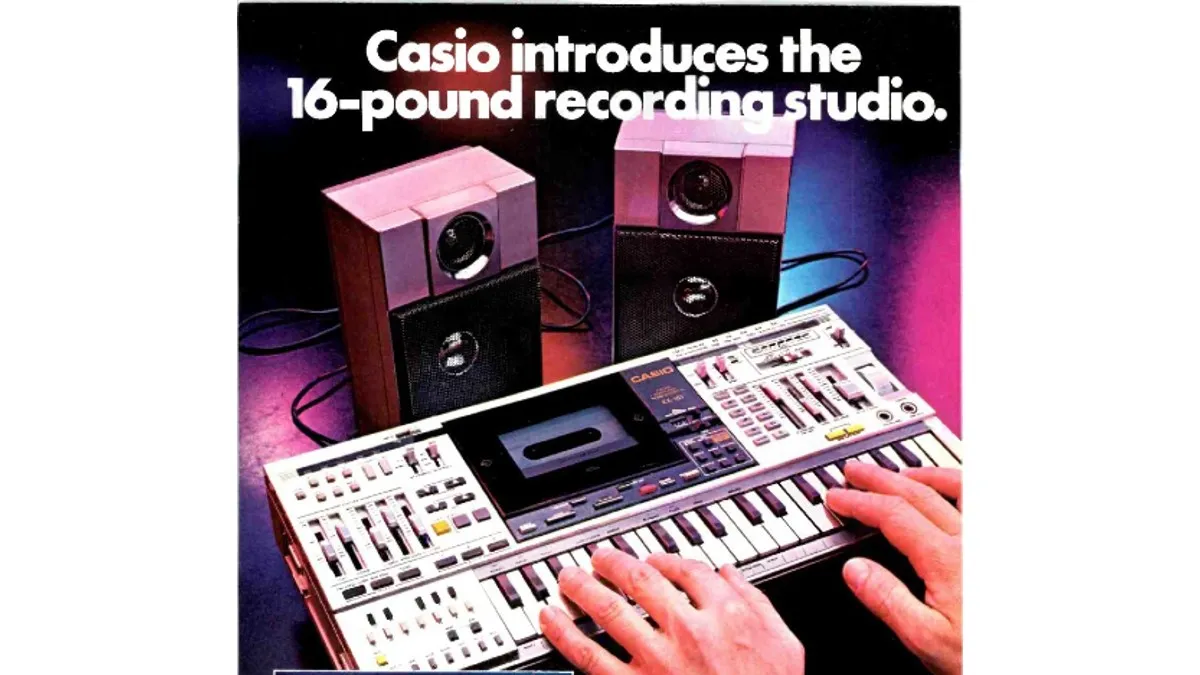
Rami’s place is full of envy-provoking vintage gear. His Hammond B-3 is covered with Casio SK series samplers, and there’s also this rare Helpinstill electric upright piano. He mixes through a vintage Trident 80B series console. When the joint is
less packed with partiers, we’ll be back for more pic and vids.
Artist Joseph Arthur painted outdoors, and perfomers included actors-turned-musicians Minnie Driver and Daryl Hannah, who was way cool and snapped a pic with me. Now, it’s my job to
be unfazed around celebrities, but the only thing that can turn me into a
raving fanboy is anyone or anything to do with Blade Runner. Daryl and I
actually wound up talking for a good while, and I told her that due to the Vangelis
soundtrack as well as its general awesomeness, Blade Runner tends to be in the
top 5 favorite movies of every keyboard player I know. She seemed delighted to
hear this, and returned that it was, in fact, her favorite movie out of all
those in which she has appeared. Fun fact: The backflipping and gymnastics of
her character (the replicant Pris) were not in the original script. Being a
gymnast, she brought that to the role, and Harrison Ford's neck vertebrae haven't been right since.
Sunday April 25
I scheduled my flight back to the Bay area for late
afternoon—5PM—in order to squeeze in one more stop on my way to the airport:
Austin-based Open Labs has opened up a showroom/service center in Los Angeles,
due to so many of their clientele being in the region. It’s in this very cool,
and stealthy, complex of live-work lofts literally in the shadow of the
Universal Studios theme park, and right up the street from go-to area retailer
West L.A. Music.
In return for manning the place, Open Labs expert
technician, gifted sound designer and composer, and unbelievably lucky bastard
Nick O’Toole gets to live on the top floor of the four-story place, with the
service department at garage level and the middle two floors occupied by various
NeKo, MiKo, and Dbeat workstations and demo areas. CEO and founder Victor Wong
was in town, as was FXpansion sound designer John Emrich. I did a little
playing of BFD Eco running on a SoundSlate, triggered from a Yamaha DTX
electronic drum kit. Yup, I played that Aerosmith beat again.
A very nice surprise was that Bela Canhoto dropped by, who
started out doing P.R. for Native Instruments and now runs her own firm. It’s
great to see someone who came up at the same time as you become such a success.
She also makes potent sugarless lemon drops, of which Victor and I partook—hey,
it was Sunday, and cocktail hour somewhere. . . .
After Victor, Nick, Bela, John, and myself all went to
brunch at the staple 101 CoffeeShop (next time, Victor, I’m gonna stick a fork
in your hand if you reach for the check), we went back to the pad to meet up
with some clients who needed a NeKo ASAP: father-and-son duo Tommy Pryd
(pronounced “pride”) III and IV. At 14, Tom IV is already getting a lot of
recognition for his prowess at classical pipe organ, and threw down a bit on a Gigastudio sample loaded into the NeKo.
Tom III told me that, in spite of having a three-manual Wurlitzer at home,
their preferred virtual pipe organ is Hauptwerk, with Konzerthaus from Vienna
Instruments a close second. In
fact, they were getting the NeKo to run these on.
Whew—what a weekend! Back to pushing the desk … for now.
I’ll leave you with one final travellers’ tip: Unless your business is mainly
in points south of Hollywood and west of the 405 freeway, the secret to a sane
L.A. arrival is to fly into Burbank, not LAX. It’s small, the TSAs are
friendly, the lines are short, and getting downtown or to Hollywood is easier
than from LAX. Besides, the airport is named after Bob Hope. How can you not
support that?